
Alright, fellow wanderlusters, gather ‘round! Your favorite (and only slightly opinionated) Vietnam-based travel blogger is back, and today I’m spilling the beans on a place I genuinely adore. After living here for, well, let’s just say many years, you start craving experiences that go beyond the well-trodden paths of Hạ Long Bay or the lantern-lit streets of Hội An. Not that those aren’t magical, of course, but sometimes you just need to… *breathe*.
And that, my friends, is exactly what Kon Tum offers. Tucked away in Vietnam’s glorious Central Highlands, this province is often overlooked, overshadowed by its flashier cousin, Đà Lạt, or the coffee capital, Buôn Ma Thuột. But let me tell you, Kon Tum has a quiet, captivating charm that will steal your heart if you let it. And guess what? It’s still wonderfully authentic in 2026!
🌿 Why Kon Tum Needs to Be On Your Radar NOW
If you’re anything like me, you chase authenticity. You want to meet real people, taste real food, and see landscapes that haven’t been manicured for Instagram. Kon Tum delivers all of this in spades. It’s a melting pot of ethnic minority cultures – primarily the Ba Na and J’rai people – whose traditions, communal houses (nhà rông), and gong music are still very much alive and central to their daily lives.
Plus, let’s not forget the coffee. This region is prime coffee-growing territory. Forget the touristy cafes; here, you’ll find actual plantations, often run by families who are more than happy to show you their craft (and pour you an unbelievably good cup).
“I remember my first time in Kon Tum, driving through the misty hills, seeing those iconic communal houses rising above the rice paddies. It felt like I’d stumbled into a painting. It’s a feeling I still chase, and Kon Tum delivers it every single time.”
⛪️ Kon Tum’s Must-Sees (Without the Crowds!)
1. The Kon Tum Wooden Church (Nha Tho Go) 🪵
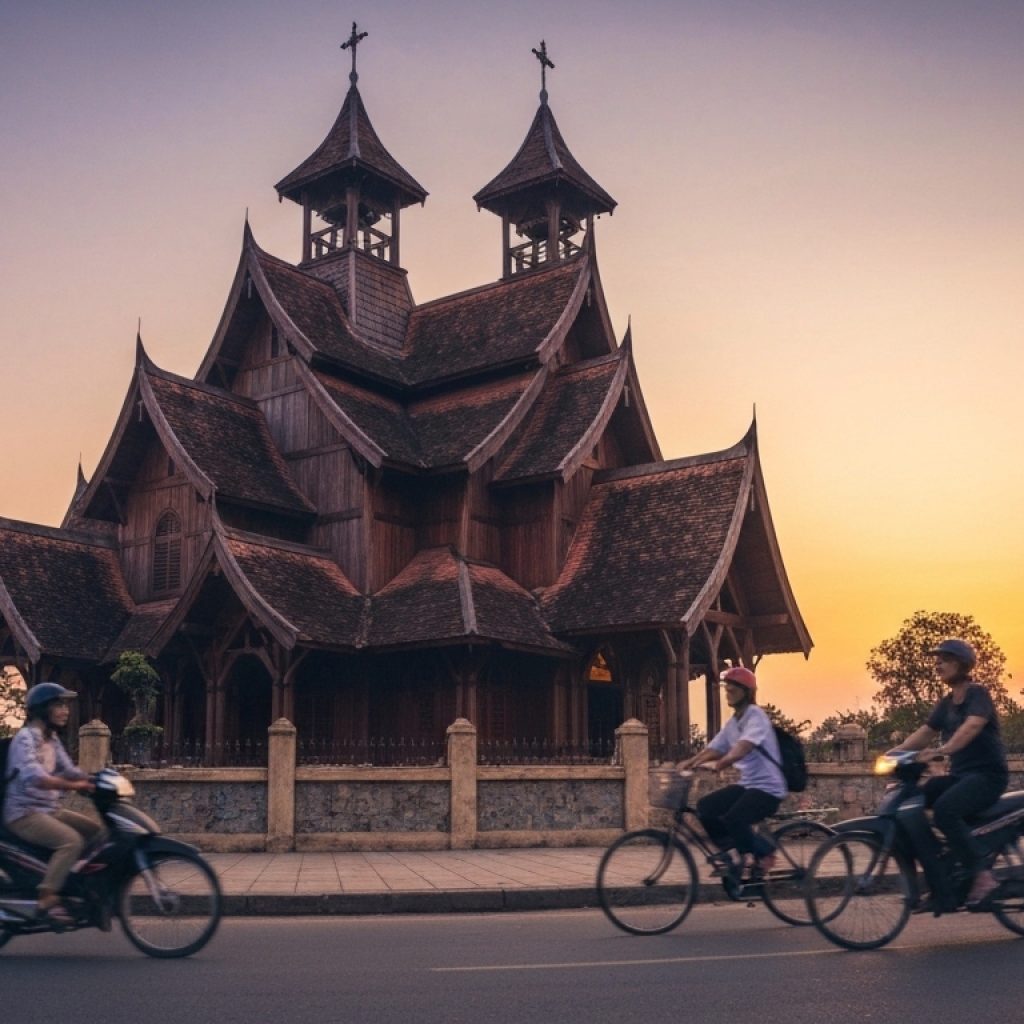
This is probably Kon Tum’s most famous landmark, and for good reason. Built entirely from wood (with some ironwood, mind you!) by French missionaries and locals between 1913 and 1918, it’s a stunning blend of European Romanesque and traditional Ba Na architecture. The stained-glass windows are beautiful, but it’s the quiet dignity of the structure itself that truly captivates. It feels ancient and incredibly peaceful.
2. Kon Klor Suspension Bridge & Communal Villages 🌉
Just a short drive from the city center, the Kon Klor Suspension Bridge spans the Đắk Bla River. It’s a great spot for photos and offers lovely views of the surrounding countryside. But the real magic lies in the villages nearby, like Kon Ktu or Plei Kô Si. Here you’ll find magnificent nhà rông – the traditional communal longhouses that are the heart of village life. They’re architectural marvels, built without a single nail!
3. Coffee Plantations & Local Life ☕
You can’t come to the Central Highlands and not immerse yourself in coffee culture. While tours exist, I recommend simply hiring a motorbike driver (or driving yourself if you’re experienced) and venturing into the hills around Kon Tum. You’ll stumble upon small, family-run plantations. Many locals are incredibly hospitable and might even invite you in for a cup. It’s a beautiful, unfiltered experience.
Wander through the Kon Tum Market too. It’s a riot of colors, smells, and sounds. This is where you’ll find fresh produce, local delicacies, and a glimpse into the daily rhythm of the city. Plus, it’s a great spot for cheap eats!
🍜 Eating Your Way Through Kon Tum
Oh, the food! Kon Tum’s cuisine is hearty, flavorful, and distinctly Central Highlands. Here are a few must-try dishes:
- Bún Cà Ri Gà (Chicken Curry Noodle Soup): Unlike Southern Vietnamese curries, this one is often thicker, richer, and incredibly aromatic. Perfect for a cool morning.
- Phở Khô Gia Lai (Dry Pho Gia Lai-style): Okay, so it’s technically from neighboring Gia Lai, but it’s wildly popular in Kon Tum. Think separate bowls of noodles, broth, and various meats – you mix and match! It’s a revelation.
- Gỏi Lá (Leaf Salad): This is an experience! You get a huge platter of dozens of different types of leaves (some familiar, some… less so), various grilled meats, shredded pork skin, and a dipping sauce made from fermented sticky rice. Wrap everything in a leaf and enjoy! It’s a fun, communal meal.
- Cơm Lam (Bamboo Sticky Rice): Sticky rice cooked inside bamboo tubes, often served with grilled pork. The bamboo imparts a subtle, earthy flavor. A fantastic snack or side dish.
Expect to pay very local prices. A bowl of soup will typically set you back around 30,000-45,000 VND. Meals are incredibly affordable.
✈️ Getting There & Around Kon Tum
By Air:
The nearest airport is Pleiku Airport (PXU) in Gia Lai province, about a 45-minute to 1-hour drive from Kon Tum city. Vietnam Airlines, VietJet Air, and Bamboo Airways operate daily flights from Hồ Chí Minh City and Hanoi. From Pleiku, you can take a local bus, taxi, or arrange a Grab car (if available) to Kon Tum.
By Bus:
Overnight sleeper buses (xe khách) are a popular and budget-friendly option from major cities like Hồ Chí Minh City, Đà Nẵng, and even Hanoi. The journey can be long (e.g., 10-12 hours from HCMC), but they drop you right in Kon Tum city. Look for reputable companies like Futa Bus (Phương Trang) or Vinh Thanh Bus.
Getting Around:
- Motorbike Rental: The most flexible option, allowing you to explore at your own pace. Expect to pay around 120,000-150,000 VND per day.
- Taxi/Grab: Available within the city, but Grab isn’t as prevalent as in bigger cities.
- Xe Ôm (Motorbike Taxi): Negotiate the price beforehand! A good way to get to nearby villages if you’re not comfortable driving.
🏨 Where to Crash in Kon Tum
Accommodation in Kon Tum is primarily guesthouses and small hotels. Don’t expect five-star luxury, but you’ll find clean, comfortable, and affordable options. I always recommend staying near the city center for easy access to food and sights.
- Hanh Nga Hotel: A reliable mid-range option with good service.
- Indochine Hotel Kon Tum: If you want something a bit more upscale, this is probably your best bet, with nice rooms and a pool.
- Homestays: For a more immersive experience, look for homestays in nearby villages. Ask your guesthouse owner for recommendations! They often have connections.
🗓️ Best Time to Visit
The dry season, from November to April, is generally considered the best time to visit Kon Tum. The weather is pleasant, with sunny days and cooler evenings. The rainy season (May to October) can bring heavy downpours, which might make exploring the rural areas a bit more challenging, but it also paints the landscape in lush, vibrant greens.
🎒 Final Thoughts
Kon Tum isn’t for everyone. It’s not about luxury resorts or curated tourist experiences. It’s about genuine connection, breathtaking natural beauty, and a deep dive into cultures that are still very much alive and thriving. It requires a little more effort, a little more patience, and a willingness to step outside your comfort zone – but I promise you, the rewards are immense. If you’re looking to truly understand Vietnam beyond the postcards, if you’re craving that authentic, soul-stirring adventure, then pack your bags and head to Kon Tum. You won’t regret getting lost (and found!) in its quiet magic. Happy travels, my friends! See you on the road!